
Quick Summary
- SSC stands for Staff Selection Commission, the official recruiter for thousands of Group B and Group C central government posts every year.
- It conducts separate exams matching different education levels — 10th pass, 12th pass or graduate.
- Major exams include CGL, CHSL, MTS, GD Constable, JE and Stenographer.
- Jobs offer job security, pensions and allowances that vary by city category and pay level.
- Understanding the SSC full form helps aspirants pick the right exam instead of wasting years on mismatched preparation.
You type “SSC full form” expecting a simple answer and suddenly face a flood of exam names, tier structures and conflicting advice from forums. Many 12th-pass or fresh graduate students in India hit this exact wall — some assume it refers to the old Secondary School Certificate from board exams, while others jump straight into preparation without knowing whether the Commission actually matches their qualification or career expectations. The confusion is real, especially when community threads highlight cut-throat competition, tiny mark differences deciding post quality, and the fear of investing 2–4 years only to question if a stable government job was worth it. This guide clears the fog with verified facts from the official portal so you can decide with clarity instead of guesswork.
On this page
What Does SSC Stand For?
SSC stands for Staff Selection Commission. It is a government organization in India under the Department of Personnel and Training that conducts competitive examinations for recruiting staff to Group B and Group C posts in various central government ministries, departments, and organizations. For millions of Indian aspirants, understanding the SSC full form opens the door to stable, prestigious government careers without needing to clear UPSC-level exams.
The Commission was set up on 4 November 1975 as the Subordinate Services Commission and was later renamed in 1977. Its mandate remains focused on fair, merit-based selection for non-gazetted and non-technical roles across the country.
Reality check: SSC full form in the context of government jobs has nothing to do with the Secondary School Certificate awarded by CBSE or state boards after Class 10. Mixing the two is a common early mistake that sends students down the wrong preparation path.
In practice, the SSC serves as the single-window gateway for lakhs of candidates who want central government employment without the extreme competition of civil services. It handles everything from application to final selection, including computer-based tests, skill tests where required, and document verification.
A pattern that surfaces repeatedly in aspirant communities is the surprise at how many different exams the same body actually runs — each tailored to a specific qualification level rather than one giant test.
Major Exams Conducted by the SSC
The SSC does not run a single examination. It conducts multiple exams every year, each aligned to a particular educational qualification and set of posts. This structure lets candidates target opportunities that match their current qualifications instead of waiting years for the “perfect” exam.
Here is a clear snapshot of the major ones:
| Exam | Minimum Qualification | Key Posts Offered | Typical Selection Stages |
|---|---|---|---|
| Combined Graduate Level (CGL) | Graduation | Inspector (Income Tax, Central Excise), Assistant Section Officer, Auditor, Assistant Audit Officer | Tier 1, Tier 2, Document Verification |
| Combined Higher Secondary Level (CHSL) | 12th pass | Lower Division Clerk, Data Entry Operator, Postal Assistant, Junior Secretariat Assistant | Tier 1, Tier 2 (Skill Test) |
| Multi-Tasking Staff (MTS) | 10th pass | Peon, Havaldar, Cleaner, Gardener in various departments | Paper 1, Physical Test (for Havaldar) |
| General Duty Constable (GD) | 10th pass | Constable in CAPFs, Assam Rifles, SSF | Computer-Based Test, Physical Efficiency Test |
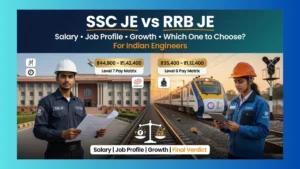
| Junior Engineer (JE) | Engineering Diploma/Degree | Junior Engineer (Civil, Mechanical, Electrical) | Paper 1, Paper 2 |
| Stenographer Grade C & D | 12th pass | Stenographer in Ministries | Computer-Based Test, Skill Test |
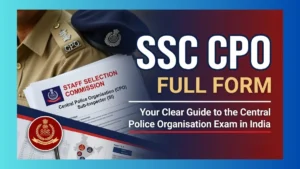
| Central Police Organisation (CPO) | Graduation | Sub-Inspector in Delhi Police and CAPFs | Paper 1, Physical Test, Paper 2 |
Each exam follows its own notification calendar published on ssc.gov.in. The Commission updates the schedule annually, so checking the official site remains the only reliable source for exact dates and vacancies.
For freshers with only 12th standard: CHSL or MTS offers the most direct entry route. CGL requires graduation, so attempting it early wastes attempts without adding value.
Eligibility and Selection Process Overview
Eligibility varies mainly by education level, age (usually 18–27 or 18–30 with relaxations for reserved categories) and nationality (Indian citizens primarily). The selection process is merit-based and transparent: computer-based tests assess reasoning, quantitative aptitude, English and general awareness, followed by skill or physical tests where the post demands it.
One honest observation from years of seeing aspirant journeys is that many underestimate how much the normalisation of scores across shifts and the final merit list can shift post allocation by just a few marks.
Posts, Salary Structure and Perks
SSC-recruited posts fall under the 7th Pay Commission with pay levels ranging from 2 to 7, depending on the exam and post. The in-hand salary depends heavily on HRA category (X for metros, Y for major cities, Z for smaller towns), Dearness Allowance (DA) revisions, and years of service.
Entry-level gross salary typically falls between approximately INR 28,000 and 70,000 per month, with the higher end applying to X-category cities such as Delhi, Mumbai or Bengaluru, while Y and Z postings sit closer to the lower figure. Additional benefits include pension under NPS, medical facilities, leave travel concession and promotion avenues.
Government vs private salary: SSC jobs offer far superior long-term security and post-retirement benefits even if initial take-home appears comparable to some private sector roles; the real advantage compounds over 30+ years of service.
[Verify: confirm exact pay levels and current DA rates in the latest official recruitment notification for the specific post.]
The Indian Ground Reality of SSC Preparation
A common thread in career communities around SSC is the realisation that raw effort alone does not guarantee success — normalisation, shift luck and vacancy fluctuations play a bigger role than most coaching modules admit. Middle-class aspirants often face the added pressure of balancing family expectations with the reality that 3–4 years of dedicated prep can still leave them questioning alternatives like railways or state-level jobs that sometimes offer home-state postings with similar pay scales.
Yet the appeal remains strong because once selected, these positions provide predictable career growth, job security and respect that many private-sector paths struggle to match in the Indian context.
Clearing Common Confusions Around SSC
Many aspirants still ask whether SSC is only for clerical jobs or whether it can lead to officer-level roles. The truth is Group B posts like Inspector or Assistant Section Officer carry executive responsibilities and respectable status within government hierarchies.
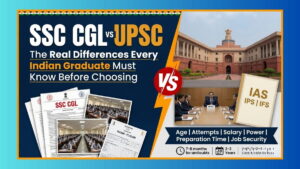
Another frequent doubt concerns the difference between SSC and UPSC. While UPSC handles Group A central services and higher civil services, the SSC focuses exclusively on Group B and C — making it more accessible for candidates who want government service without the ultra-competitive UPSC syllabus.
CGL vs CHSL: CGL suits graduates seeking higher pay levels and officer-like roles; CHSL remains the practical choice for 12th-pass candidates who want faster entry into the system.
Frequently Asked Questions
What is the full form of SSC in government jobs?
SSC stands for Staff Selection Commission, the official body that recruits staff for Group B and Group C posts across central government ministries and departments.
What does SSC full form mean in the context of school exams?
In school exams, SSC refers to the Secondary School Certificate (Class 10 board qualification). It has no connection with the Staff Selection Commission used for government recruitment.
Which SSC exam should a 12th-pass candidate choose in India?
For 12th-pass students, Combined Higher Secondary Level (CHSL) or Multi-Tasking Staff (MTS) offers the most suitable and direct entry routes into central government jobs.
Is the SSC salary enough for a good life in Indian metros?
Entry-level SSC salaries after allowances range roughly from INR 30,000 to 60,000+ in-hand, depending on the city HRA category. With promotions and DA revisions, it supports a comfortable middle-class lifestyle, especially with job security and a pension.
How is SSC different from UPSC?
SSC recruits for Group B and C posts through exams aligned to 10th, 12th or graduate levels, while UPSC handles higher Group A civil services and requires far more intensive preparation for fewer vacancies.
Is preparing for SSC worth it in 2026 for freshers?
Yes, if you choose the exam that matches your current qualification and prepare consistently for 10–12 months. Many aspirants clear it in the first or second serious attempt and enjoy long-term stability that private jobs rarely match.
Can candidates appear for multiple SSC exams in the same year?
Yes, provided you meet the eligibility criteria for each. Many candidates strategically appear for CHSL while pursuing graduation to keep options open.
What is the biggest mistake most SSC aspirants make?
Treating every exam the same instead of matching the exam to their exact qualification level and ignoring the impact of normalisation and vacancy fluctuations on final post allotment.
Why Understanding the SSC Full Form Changes Your Preparation Strategy
The confusion around SSC full form is more than academic — it determines whether you spend the next year preparing for an exam you are actually eligible for or waste attempts chasing mismatched opportunities. Once you know it is the Staff Selection Commission responsible for accessible central government jobs, the path becomes clearer: match your education level to the right exam, prepare with the official syllabus and previous papers, and stay realistic about competition without losing sight of the genuine long-term benefits these roles provide.
Start by visiting ssc.gov.in and checking the latest calendar. The right information at the beginning saves years of trial and error.